v22 Choosing a Vendor Is Also About Being Chosen

Choosing a Vendor Is Also About Being Chosen (Podcast Now Available on Spotify)
One vendor decision can make or break momentum.
That might sound dramatic, but if you’re building at an early stage, you know it’s not.
Early-stage startups are underdogs by default. You’re small. Resource-constrained. Challenging companies that are far more comfortable than you are. With limited time and resources, you simply can’t hire for every capability you need.
Which means the right partners don’t just help. They become force multipliers.
I’ve spent the past decade making vendor decisions inside Fortune 500s, mid-size companies, and startups. And across all of those environments, especially at the early stage, one pattern keeps repeating:
The quality of partners you attract is constrained by how you show up.

When Budget Isn’t Your Leverage, Conviction Has to Be
At Ubiety, we’re a small startup in Chicago trying to earn the right to protect millions of American families.
It’s an ambitious mission and one we can’t accomplish alone.
Like most early-stage teams, we don’t have infinite time, infinite budget, or the ability to hire for every capability we need. There are simply too many things that matter, and too few people to do them all well.
That’s why vendors aren’t optional at this stage. They’re how momentum exists at all. This is where reality sets in.
When you don’t have a budget as leverage, you don’t get chosen by default. By default, great vendors want to work with teams that have deep pockets, clear roadmaps, and predictable timelines. Things early-stage startups rarely have.
So if budget isn’t the reason someone leans in, something else has to be.
What we’ve learned is that conviction becomes the signal.
Clarity about what you’re building. Honesty about your constraints. And the ability to articulate why this partnership matters beyond the scope of work.
Once you see that clearly, vendor selection starts to feel less like procurement and a lot more like fundraising.
Why Great Vendors Behave Like Investors
Great vendors don’t behave like neutral service providers. They behave much more like investors.
Not because they’re trying to be difficult, but because they’re constantly allocating scarce resources of their own. Time. Senior attention. Creative energy. Discretionary effort.
Just like investors, great vendors make judgment calls early. Investors aren’t trying to predict success. They’re screening for avoidable failure and meaningful upside. Great vendors think the same way.
They’re asking questions beneath the surface:
Will this team be clear or chaotic?
Anchored or constantly shifting?
Inviting partnership or outsourcing clarity they haven’t done yet?
These judgments happen quickly, often within the first conversation. And they shape everything that follows, how much effort gets invested, how senior the team is, how flexible the partnership becomes when things get hard.
Just like investors, vendors aren’t all choosing by the same criteria. But the best ones are always choosing.
Once you recognize that, the dynamic shifts. Vendor conversations stop being about who has the best pitch. They become moments where both sides are deciding whether this is something worth committing to.
What Vendors Are Actually Evaluating When They Meet You
By the time a vendor gets on a first call, they’re not just listening for what you want. They’re listening for what could go wrong, and whether this is a relationship that makes sense for both sides.
They’re evaluating risk, yes. But they’re also evaluating fit.
Is this a team we can realistically grow with?
Is the scope aligned with where they are or will expectations outrun reality?
Is this the kind of product, industry, or mission our team will be energized by?
A great vendor isn’t asking whether they can do the work. They’re asking whether they should. This is also where preparation quietly becomes decisive.
Preparation isn’t about being impressive. It’s about being respectful. When you’ve taken time to understand a vendor’s work, their point of view, and the people you’re meeting with, you’re signaling that you value their craft and their time. That signal changes the tone of the conversation.
It tells the vendor this isn’t a transactional call. It’s an intentional discussion about whether there’s a real partnership here.
That’s why two startups with similar budgets can walk away with very different outcomes from the same vendor. One feels vague and extractive. The other feels thoughtful and worth leaning into.
The difference isn’t polish or scale. It’s clarity, respect, and whether both sides can see themselves winning together.

Why Vendor Selection Feels Like Online Dating
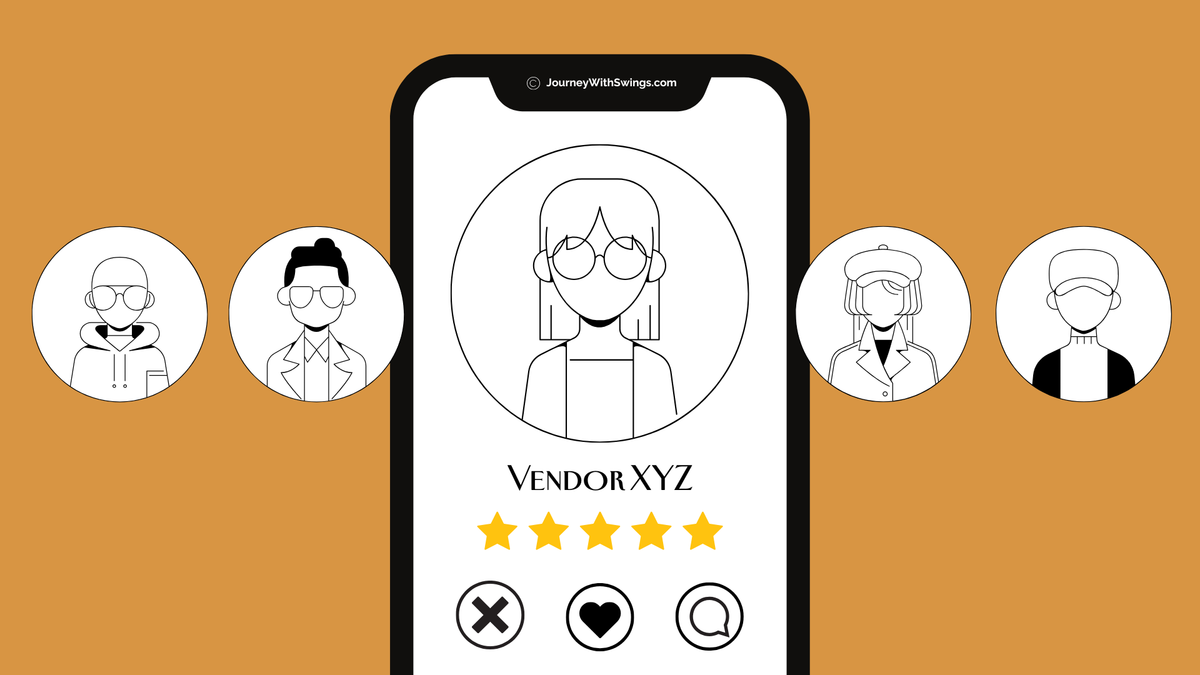
Once vendor selection stops being purely transactional, it often starts to feel surprisingly personal. And for early-stage teams, it tends to resemble something very familiar: online dating.
On the surface, online dating creates the illusion of control. Endless profiles. Endless options. The feeling that you’re the one choosing. But anyone who’s been through it knows that outcomes aren’t driven by volume. They’re driven by clarity.
What you’re actually learning through each conversation is what you value, what you can compromise on, and what’s a deal breaker. The process feels inefficient not because it’s broken, but because it’s revealing things you didn’t fully know yet.
Vendor selection works the same way.
More options don’t resolve uncertainty if you’re not clear on what you’re building, what matters most, and what kind of partnership you’re actually looking for.
A call that goes nowhere isn’t wasted time.
It’s information.
It tells you whether a vendor is energized by your mission or simply responding to a brief. Whether they’re here to build with you or just transact.
And just like online dating, early misalignment often feels frustrating, but it’s usually protective. It prevents a deeper mismatch later, when the cost would be far higher.

The Mirror: Who Are You Asking Vendors to Be?
When vendor relationships stall, it’s tempting to look outward. The vendor didn’t deliver. They didn’t “get it.” They overpromised. They felt transactional.
Sometimes that’s true.
But after seeing this play out across different companies and stages, a harder pattern emerges.
The quality of partnership you end up with is often shaped long before the work begins.
By how clearly you articulate what you’re building. By whether you’re inviting belief or just responses. By whether you’re showing up like a buyer minimizing risk, or a builder asking others to bet on something meaningful.
Great vendors, like great investors, decide early how much of themselves to invest.
And just like online dating, more options don’t solve uncertainty. Clarity does.
So before asking whether a vendor is the right fit, it’s worth pausing to ask something more uncomfortable:
Who are we asking vendors to be and how we show up invite in return?
Because choosing a vendor is never just about who you select. It’s also about who chooses you.
🎧 P.S. This Newsletter Has a Voice Now
Prefer to listen instead of read? I turned this newsletter into a short podcast episode: easy to take on a walk, a drive, or a quiet ten minutes to yourself.
▶️ Listen to “Choosing a Vendor Is Also About Being Chosen” on Spotify (Spotify link here).